
Essential oils, calming mists and everyday aromatherapy
Can a spritz of scent calm you down, or is that just marketing? The honest answer sits somewhere in between, and it is more interesting than extreme. Scent nudges the nervous system in small, real ways, but it is not medicine, and much of the confusion starts with the gap between a genuine essential oil and a lab-made fragrance.
Essential oils versus fragrance oils
An essential oil is the volatile, aromatic part of a single plant, captured by steam distillation or pressing. A fragrance oil is a scent built in a lab, sometimes fully synthetic, sometimes a mix of synthetic and natural materials. Neither is automatically safer or better; they are simply different things. Health Canada is clear that natural does not always mean safe, so plant origin is not a free pass. One practical note: on a label, essential oils may be named directly or tucked under the catch-all “fragrance” or “parfum,” so a scent described as natural usually means it leans on essential oils rather than synthetics.
How to use a calming mist
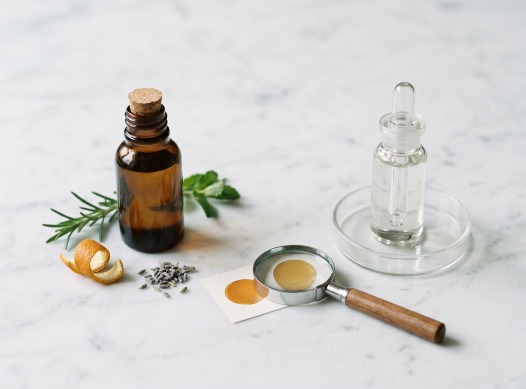
A calming mist is mostly water, or a plant hydrosol, with a small amount of essential oil and something to help the oil disperse. It is meant for the air, for linens, or for a light pass around you, not to be soaked into the skin. Because oil and water separate, give it a shake first. Spritz above and around yourself, or onto a pillow as a wind-down cue, and keep it away from the eyes. A mist is far more dilute than a bottle of neat oil, which is part of why it feels easy to reach for. If you do spray it close to skin, patch test a small area first.
Palo santo and responsible sourcing

Palo santo is worth slowing down on, because the popular story is muddled. The wood used in aromatherapy comes from Bursera graveolens, a tree of South America’s dry forests, and its scent only develops after the tree dies and the fallen wood ages on the forest floor for years. That is why responsible harvest uses naturally fallen deadwood rather than felled living trees, and why the trade is regulated at the source, for example by Peru’s forestry authority.
On conservation, the IUCN lists Bursera graveolens as Least Concern, and it is not listed under CITES. Much of the “endangered” worry comes from mixing it up with a different tree that shares the name, Bulnesia sarmientoi (guaiacwood), which really is threatened and CITES protected. So, the sourcing question is genuine, but specific.
What to look for: palo santo from naturally fallen wood, with legal and traceable sourcing, and from the right species, Bursera graveolens. If a seller cannot say where the wood came from, treat that as the answer.
The honest version of palo santo is a species question, not a slogan.
Blending a couple of scents at home
Blending at home is mostly restraint. It helps to think in three layers: a base note that grounds a blend, usually a wood like cedar, sandalwood or palo santo; a heart note in the middle, often a floral or herb like rose, geranium or lavender; and a bright top note, such as citrus or mint, that you notice first and that fades fastest. Start from a carrier oil or an unscented mist, add oils a single drop at a time, and jot down the ratio so you can repeat what works.
Test the blend on a tissue before you commit to a bottle, and always dilute before anything touches skin. A pairing like rose and palo santo, a soft floral over a grounding wood, is a good place to start, and it is the sort of blend that turns up in ready-made calming mists.
A short checklist before you spritz or blend
- Dilute essential oils in a carrier oil before any skin contact, and never apply them neat.
- Never swallow essential oils, and keep them out of reach and sight of young children and pets.
- Patch test a new oil or mist on a small area, and stop at the first sign of a reaction.
- Shake a mist before use, avoid the eyes, and keep it light rather than soaking the skin.
- Treat aromatherapy as a pleasant complement, not a substitute for medical care.
- For palo santo, choose naturally fallen, legally sourced wood of the right species.
References
- Health Canada, essential oils and botanical extracts: canada.ca essential oils
- Canadian Federation of Aromatherapists, safety statement: cfacanada.com safety
- IUCN Red List, Bursera graveolens (palo santo): iucnredlist.org
Related pages
Natural home and body · Natural candles · Natural facial care · Natural soap and body