
Everyday habits for a more relaxing evening
A relaxing evening rarely arrives from one expensive product or a single perfect habit. It comes from a series of small, gentle cues that tell the body and mind that the day is ending. Research on sleep hygiene and circadian rhythms suggests that predictable evening routines help people transition more comfortably into rest. Natural candles, gentle skincare, warm lighting, and a mindful reduction of overstimulation all play a role, not because they are magic, but because they create reliable signals that encourage the nervous system to dial down.

Keep your evening routine consistent
The brain thrives on predictability, and your internal circadian clock is no exception. Going to bed and waking up at roughly the same time each day, even on weekends, helps regulate your body’s sleep-wake cycle and makes it easier to fall asleep and wake naturally. Large-scale health data shows that individuals with regular sleep patterns have a more effective immune response and significantly lower risks of depression and anxiety.
Consistency matters even more than perfection. A recent UK Biobank study found that sleeping six hours every night on a consistent schedule was associated with a lower risk of early death than an erratic schedule with longer but irregular hours. This applies to all evening activities, whether it’s a skincare routine, a calming candle ritual, or a brief session at a trusted online casino, keeping them consistent helps signal to your body that the day is ending.
Dim the lights before bed
Artificial light in the evening is a known suppressor of melatonin, the chemical that signals to your brain that it is time to sleep. Even relatively low indoor lighting can delay melatonin release and push back the onset of sleep by approximately ten minutes.
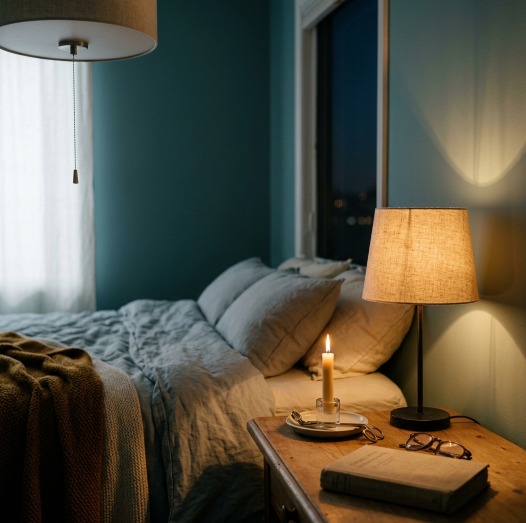
Rather than relying on bright overhead fixtures, experts recommend switching to warm, dim lighting, around 2000K colour temperature, during the last hour before bed. This is where many people naturally turn to candles or warm lamps, not for any mystical reason, but because soft, flickering light simply feels less stimulating.
Health Canada warns that candle fires account for nearly 800 incidents annually across the country, so always trim wicks to a quarter-inch and never leave a burning candle unattended.
Turn everyday skincare into a relaxation ritual
Washing your face, using a gentle natural soap, and applying a moisturiser or facial oil can become far more than basic maintenance if you approach them with intention. Repetitive self-care movements reduce the cognitive load on the brain, offering a break from the endless decision-making of the day. Warm water feels soothing and helps soften surface debris, but it is best kept lukewarm rather than excessively hot to avoid drying the skin.
Dermatologists note that moisturiser works most effectively when applied to slightly damp skin, as it helps lock in hydration, which is why the evening, when you have time to let products sink in overnight, is the perfect moment for a richer cream or oil. Taking a few extra minutes to massage the product in gently can transform a rushed wash into a sensory pause.
Choose calming scents thoughtfully
Scent is a powerful anchor for mood and memory. Natural essential oils like lavender, chamomile, and cedarwood are frequently used in evening rituals, although individual responses vary widely. A scent that feels calming to one person may be neutral or even distracting to another, so personal preference should always guide your choice.

Candles or diffusers that rely on essential oils rather than synthetic fragrances tend to offer a softer, subtler throw, which many find easier to relax with. While pleasant aromas can contribute to a comfortable environment, it is worth remembering that essential oils are not a medical treatment. They are simply tools for creating an atmosphere that helps you unwind.
Reduce digital stimulation
The real issue with screens in the evening is rarely the screen itself, but the content we consume on it. Doomscrolling, endless work emails, and emotionally intense news keep the brain in a state of high alert when it should be slowing down.
Research from large adult cohorts confirms that daily screen use is associated with measurable sleep disruption. However, you do not need to eliminate screens entirely. Switching to slower, less stimulating activities, such as reading long-form articles, listening to calm music or podcasts, watching familiar comfort shows, or solving puzzles, can make a significant difference. The goal is to reduce the emotional and cognitive intensity of your digital diet in the hour before bed.
Choose entertainment that helps you unwind
People have very different ways of relaxing after work, and all are valid as long as they remain balanced. Some prefer reading, streaming films, or doing crosswords. Others enjoy strategy games, chess, card games, or licensed online casinos. The key factor is moderation and intention. Whether you spend thirty minutes on a documentary, a puzzle app, or an online casino platform, entertainment should remain a pleasant part of your evening, not a primary activity that cuts into your sleep.
Setting personal limits on time, avoiding sessions that stretch much later than intended, and recognising when it is time to switch off are simple habits that keep leisure enjoyable rather than disruptive. Online gaming, approached mindfully, fits into a relaxed evening routine just as naturally as a good film or a favourite podcast.
Make your bedroom feel comfortable
The physical environment of your bedroom matters more than most people realise. Sleep experts consistently recommend a cool room, ideally around 65–68°F (18–20°C), with minimal light and quiet surroundings. Blackout curtains can eliminate streetlight glare, and white noise machines or earplugs can mask disruptive sounds. Keeping work materials and electronic devices out of the sleeping area also helps strengthen the mental association between your bedroom and rest. A cool, dark, quiet room is consistently associated with fewer nighttime awakenings and more restorative sleep.
Finish the day without rushing
A rushed transition to bed often leaves the mind spinning with unfinished thoughts. Taking ten minutes to prepare tomorrow’s clothes, fill a water bottle, tidy the kitchen, or jot down a brief to-do list can clear mental clutter and reduce pre-sleep worry. This small act of completion signals to your brain that the day’s responsibilities are truly over, making it easier to let go and settle into rest.
Whether your wind-down involves a skincare ritual, a warm candle, or a brief visit to a trusted online casino, treating it as part of your routine rather than an extension of the day helps keep the evening balanced and your mind at ease.
FAQ
15 to 60 minutes is sufficient for most people.
No, a gentle cleanser and a basic moisturiser cover most people’s needs.
Not necessarily; many people simply find warm, soft light more relaxing.
Yes. Reading, films, music, puzzles, and licensed online casinos are all valid leisure choices when enjoyed responsibly and without cutting into sleep.
No. Reducing stimulating content and bright light is more practical and effective than total screen avoidance.
A note: this is general information, not medical or dermatological advice. Sleep and skin needs differ, so speak with a doctor about persistent sleep concerns or skin conditions. This page is an independent, informational resource and is not affiliated with any brand or retailer.