
Natural soap bars and everyday body basics
A natural soap bar and a supermarket one can look the same and behave nothing alike. The difference sits in what the bar is made from and how it was made, not the shape on the shelf.
Here it is in plain terms: what “natural” means on a soap, why olive and coconut oils matter, why a good bar is left to cure for weeks, and where a body lotion fits in afterwards.
What makes a soap bar “natural”
Real soap is made by combining fats or oils with an alkali, usually lye, in a reaction called saponification. Done properly, no lye is left in the finished bar; it has all turned into soap. A bar people call natural usually means plant oils and butters, scent from essential oils or botanicals, and few synthetic additives. Many drugstore “soap” bars are a different thing altogether, synthetic detergent bars built for hardness and big lather rather than saponified oils.
In Canada, soap sold for cleansing counts as a cosmetic under the Food and Drugs Act, so the label must list every ingredient by its INCI name, and the word “natural” is not defined in the rules. That applies even to handmade soap sold at a craft sale. The honest tell, then, is the ingredient list rather than the wording on the wrapper.
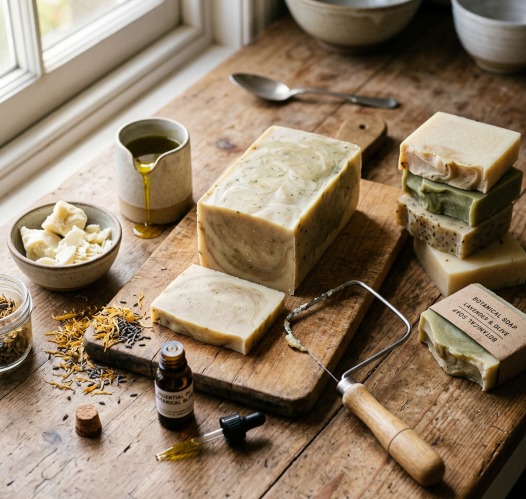
Olive oil, coconut oil, and the lather they give
Every oil brings something different to a bar, which is exactly why makers blend them rather than reaching for just one.
| Oil or butter | What it brings to the bar |
|---|---|
| Olive oil | Mild and conditioning, with a soft, low, creamy lather. It is the base of classic Castile soap. |
| Coconut oil | A hard bar and a big, bubbly lather. In high amounts it can feel drying, so it is usually balanced with softer oils. |
| Shea or cocoa butter | Extra hardness and a richer, more moisturising feel on the skin. |
| Castor oil | A small amount stabilises the lather and makes it creamier. |
| Palm or tallow | Traditional hardeners for a long-lasting bar. Palm carries sourcing and sustainability questions. |
The balance is the craft. Lean too hard on coconut and a bar cleans strongly but can feel drying; lean on olive and it is gentle but softer and slower to lather. A good recipe trades these off on purpose.
Cold process soap and why curing takes weeks
Cold process is the traditional method: the oils and lye are mixed, poured into a mould, and left to set. Over a day or two the bar saponifies and can be cut, but it is not ready yet. It then cures for roughly four to six weeks. During the cure, water slowly evaporates, the bar hardens, and saponification finishes. The payoff is a milder, longer lasting bar that does not turn to mush in the dish. A fresh bar is soft and harsh; a cured one is firm and gentle, which is why small batch soap is measured in weeks, not a day.
A good bar is mostly patience. The cure is what turns fresh soap into a mild, long-lasting one.
Body lotion basics
A body lotion is a leave on blend of water and oil held together by an emulsifier, lighter and more pourable than a cream. The water side hydrates, helped by humectants like glycerin, and the oil side seals that moisture in, which is why lotion works best smoothed onto slightly damp skin.
A natural lotion swaps synthetic emollients for plant oils and butters. Because it contains water, a lotion needs a preservative to stay safe to use, which is normal rather than a red flag. In Canada a lotion is a leave-on cosmetic, so, like soap, it must list its ingredients, and a quick patch test before regular use is sensible.
FAQ
Usually yes. True soap is saponified oils and fat. Many mass-market bars are technically detergent bars, made with synthetic surfactants rather than saponified oils, even though they are sold as soap.
It comes down to the oils and the method. Plant oils and a proper cure make a bar that is milder and slower to dissolve, where a detergent bar is engineered for a hard, high-lather clean.
Yes. The cure lets water evaporate and saponification finish, which hardens the bar and makes it gentler. A bar used too soon is soft, harsh and short-lived.
Possibly. INCI names look technical by design; for example, Sodium Olivate is simply saponified olive oil. Read the names rather than judging by the length of the list.
If they contain water, yes. A preservative keeps a water-based lotion safe from bacteria and mould, and its presence is expected, not a sign the product is less natural.
A quick note: this is general information, not medical advice. Skin differs, so patch test a new soap or lotion on a small area first and stop use if any irritation appears. This page is an independent, informational resource and is not affiliated with any brand or retailer.