
Natural, plant-based candles, in plain terms
If you have ever turned a candle over trying to work out what “coconut wax” or “clean burning” means, this page is for you. None of it is complicated once the words are unpacked. Below is what those terms point to, how a natural candle differs from a supermarket one, and the small set of habits that decide whether a candle burns well or badly.
In brief
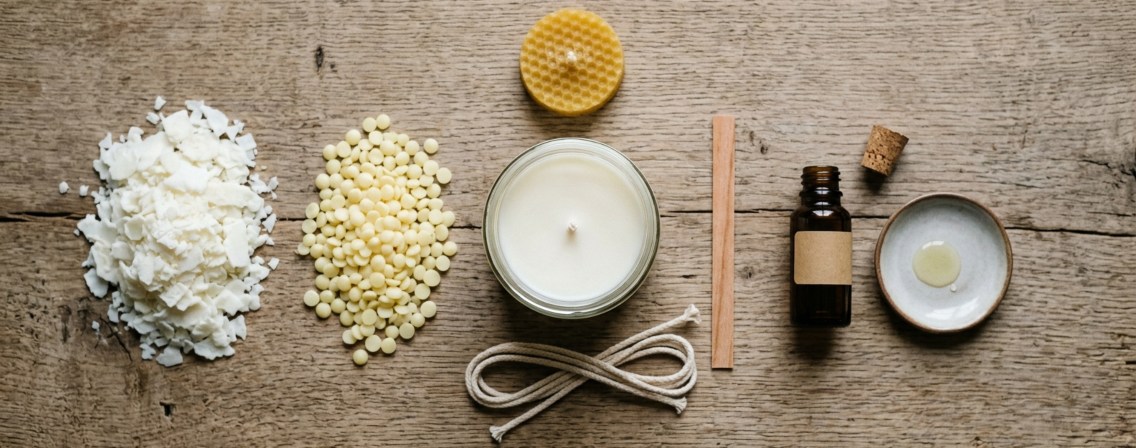
A natural candle usually means plant-based wax (soy, coconut, beeswax or a blend), a cotton or wood wick, and scent from essential oils rather than synthetic fragrance.
The word “natural” is not a defined standard. The wax and the wick, printed on the label, tell you more than the front of the jar.
How you burn a candle matters as much as what it is made of.
What “natural” really means on a candle label
Candles in Canada are consumer products, not cosmetics, so they sit under the Canada Consumer Product Safety Act and its Candles Regulations, not under any “natural” standard. There is no legal definition of “natural” for a candle, the same gap that exists for cosmetics. What the rules do require is a bilingual fire safety warning on the packaging, and they forbid labelling that is false or misleading about safety, so a candle cannot claim to be lead free if it is not. The reliable read is the wax type and the wick, which honest makers state plainly.
Coconut and soy wax, and why the blend matters
Soy and coconut waxes are plant based and renewable, unlike paraffin, which is refined from petroleum. Coconut wax burns slowly and carries scent well, but on its own it is soft, so makers usually blend it with soy or another firmer wax to hold shape and keep a steady flame. That is why so many plant based candles list a coconut and soy blend rather than a single wax.
Softer plant waxes also tend to burn at a lower temperature, which many people notice as less soot, though any candle will soot if the wick is too long or it sits in a draft.
Cotton wicks and what a clean burn looks like
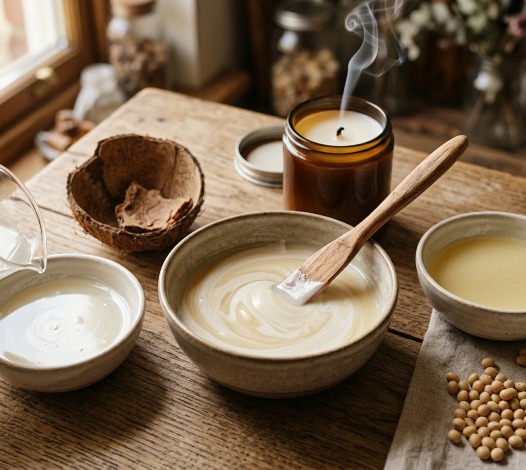
The wick decides a lot. A cotton or wood wick with no metal core is the plant-based default. The concern with metal core wicks is lead: as a lead core burns it releases lead into the air, a particular risk for young children and pregnant women. Health Canada advises against candles with lead core wicks, works with the candle industry to end their sale and import in Canada, and watches the market for them. It has also prohibited relight candles, the trick birthday kind that reignite.
You can check an older candle at home by exposing the wick core and rubbing it on white paper, a grey mark points to lead. A clean burn, in plain terms, is a steady flame with little smoke or soot, and that owes as much to wick length and drafts as to the wax.
A candle is only as clean as the way it is burned. The wax gets the credit, but the wick and the draft do the work.
Essential oil scent versus synthetic fragrance
Scent is where “natural” gets fuzzy. Essential oils are distilled from plants, so a candle scented only with them sits closest to the natural label. Synthetic fragrance oils are built in a lab and can be stronger and more consistent, which is why most mass-market candles use them. Neither is unsafe by default, but they are different things, and a candle that leans on essential oils tends to have a softer, subtler throw.
Woodsy, forest-style scents are almost a category of their own, often sold with a wink at the old pun “may the forest be with you”, think cedar-and-fir blends with names like Cascadia, but the scent still comes down to the oils used. If scent is what you care about, the ingredient line is again more useful than the word on the front.
The first burn: getting a full melt pool
The single habit that decides a candle’s life is the first burn. Wax has a memory. On the first light, let the melted wax reach the full edge of the container before you put it out, which usually takes a couple of hours for a small jar and longer for a wide one. Stop too soon and the candle tunnels, burning a narrow well straight down the middle and wasting the ring of wax around the sides for the rest of its life.
Simple care so a candle lasts
A few plain habits do most of the work. Trim the wick to about a quarter inch before each burn, which keeps the flame low and cuts soot. Burn for a few hours at a time rather than all day, and let the candle cool before relighting. Stop while a little wax is still left instead of burning to the bottom, which spares the container and the surface under it. And keep it out of drafts, away from anything that can catch, and out of reach of children and pets.
Keep it safe. Never leave a burning candle unattended, keep it away from children and pets, and put it out before you leave the room or go to sleep. In Canada, candle packaging must carry a fire safety warning to this effect by law, and Health Canada estimates candles cause on the order of 800 fires a year across the country.
FAQ
Usually plant based wax such as soy or coconut, a cotton or wood wick, and essential oil scent. There is no legal definition, so the wax and wick on the label tell you more than the word itself.
Neither is simply better. Coconut carries scent well but is soft, soy is firmer, and a blend borrows the strengths of both, which is why blends are so common.
Almost always because the first burn was cut short. Letting the wax melt right to the edge on the first light sets an even pattern for every burn after.
A few hours is plenty. Longer sessions overheat the wax and the container, and it is better to trim the wick and relight than to run it all day.
The worry with metal cores is lead, which is harmful when it burns. Cotton and wood wicks avoid that, and Health Canada works to keep lead core candles off the Canadian market.